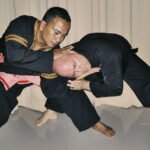
The Warrior Arts of Indonesia (WAI), pronounced ‘way,’ is a dynamic organization founded in 2012 by Johnny Silmon. With over 25 years of incubation and formation, the WAI is deeply committed to exploring and promoting the rich heritage of Silat, an Indo/Malay martial art that has been present for centuries.
The Historical Significance of Silat
Silat’s genesis remains shrouded in mystery, with no definitive point of origin. However, ample evidence suggests that its evolution spans well over 1000 years. Indonesia, once known as Nusantara, holds a pivotal position in the world with its strategic location along numerous trade routes. This historical positioning facilitated interactions with diverse cultures, leading to the hypothesis that Silat’s development was influenced by martial arts from various nations.
Additionally, Indonesia’s historical tapestry is adorned with the tales of mighty kingdoms like Sriwijaya, Padjadjaran, and Majapahit, where hand-to-hand combat played a crucial role in shaping combative arts, potentially paving the way for the emergence of Silat.
Aliran and Perguruan: Two Streams of Silat
In modern Indonesia, Silat is expressed through a plethora of diverse styles, broadly classified into two categories: Aliran and Perguruan.
- Aliran: The Original Streams
Aliran, meaning ‘an original stream,’ refers to styles like Cimande, Cikalong, and Sera, all hailing from the Sundanese culture in West Java province. Though they may have been influenced by other styles during their inception, over time, these styles have become known as ‘original’ due to the scarcity of verifiable historical information. Each Aliran embodies unique characteristics that were new and innovative in their time.
- Perguruan: The Schools of Thought
Perguruan denotes a school or institution, representing styles that deviate from Aliran. Generally, newer Perguruan styles often incorporate techniques and names borrowed from original streams. Examples include Mande Muda, a fusion of various styles enriched by the founder’s personal experiences, and Silat Panglipur. While some may argue superiority, Perguruan styles offer diverse techniques and training methods, with the ultimate success determined by the practitioner’s understanding and mastery.
Appreciating Diversity in Silat
Both Aliran and Perguruan styles possess great merit and cater to individuals with varying physiological capabilities and limitations. The beauty of Silat lies in its ability to suit every practitioner, offering an art form that aligns with their unique strengths and interests.
WAI’s Role in Promoting Silat
The WAI proudly establishes direct connections with numerous streams of Silat across Indonesia, such as Pencak Silat from Java and Silek Minang from Sumatra. Although it is challenging to encompass every style, the organization remains dedicated to bringing exciting features, media, and methodologies related to the diverse warrior arts of Indonesia.
Testimonials
“Johnny Silmon is one of the pioneers of Indonesian martial arts in Europe. A superb individual his knowledge of the tradition is deep and wide. Not only a great teacher and Martial artist he’s also a great human being. Friendly, inclusive, and open to the new. Like a true warrior his strength isn’t on show but there when it’s needed. A great guy I can’t recommend him highly enough.”
Bob Breen
– U.K Martial Arts Legend

“Johnny Silmon is a man of exceptional knowledge and talent. I have shared in three of his many trips to Indonesia and experienced first hand his knowledge of many different silat styles and seen the respect he has earned in the homeland of Indonesian martial arts. He is generous and open-hearted, a man of great principle and fun to be with. Knowledge of this kind is hard earned. If you get the chance to train with Johnny or learn from him in other ways – take it!
MARK YOUNG
– Head Instructor Ripon Silat Academy / Osteopath

” I have trained with Johnny many years now. We do a great many different things including Silat, which I enjoy. His knowledge is exceptional.”
JUDE LAW
– Actor